
From Holiday Campaigns to Year-Round Engagement: Making Gift Cards Part of Your Customer Strategy
Holiday campaigns are often planned around a clear deadline. The team chooses an offer, prepares the creative, launches the campaign, tracks sales and reviews the results once the rush is over. Gift cards fit naturally into this cycle: they are easy to promote during the holidays and can help generate sales during a busy period.
But a campaign can be successful in the short term and still leave a bigger opportunity untouched. What happens when the seasonal promotion ends? Do the relationships created during the campaign continue, or does the customer journey go quiet until the next major holiday?
The answer depends partly on how gift cards are planned. If they are treated only as a seasonal product, the strategy may stop at sales and redemption. If they are considered part of a broader customer engagement plan, they can support activity before, during and after the holiday period.
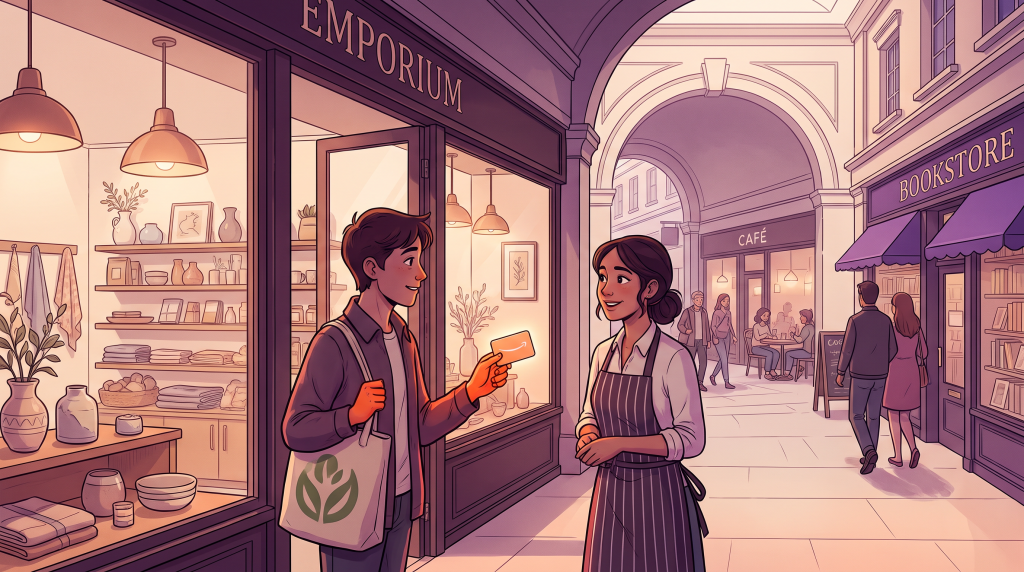
Start planning before the campaign launches
A year-round strategy begins with a question: what do we want the gift card campaign to achieve beyond immediate sales? The answer might be to introduce new visitors to a shopping destination, encourage existing customers to explore more stores, support loyalty programme growth or create a reason for customers to return after the holidays.
Different goals require different measures. If the objective is acquisition, look at whether the campaign reaches new audiences and whether the recipient experience gives them a reason to engage again. If the objective is loyalty, decide how you will measure relevant sign-ups or subsequent activity. If the goal is to encourage repeat visits, define what a return visit means and over what period you will assess it.
Being clear about the goal before launch makes it easier to choose useful reporting later. Otherwise, teams can end up with plenty of numbers but little clarity about what they mean.
Treat the customer journey as more than a campaign calendar
A campaign calendar usually shows what the business plans to publish or send. A customer journey asks what the customer may need at each stage. Both are useful, but they answer different questions.
Before the holidays, customers may need inspiration or clear information about gift card options. During the season, recipients may need simple redemption instructions or help discovering where the card can be used. After redemption, some customers may be interested in a loyalty programme or relevant information about a destination they have just discovered. Others may not want further communication at all.
This is why a single sequence should not automatically be sent to everyone. The next step should reflect what the business knows, what the customer has agreed to receive and what is likely to be useful in that context.
Give January a role in the plan
January is often treated as the quiet period after the holiday rush. It can also be a useful time to review what happened and decide what to improve. Did the campaign attract people who had not visited before? Were customers able to redeem their cards easily? Did loyalty sign-ups increase? Which channels or messages appeared to bring useful engagement?
Use these findings to shape the next phase rather than simply moving on to the next seasonal promotion. If customers responded well to a particular type of information, consider whether it can be useful throughout the year. If the redemption process created confusion, fix that before the next campaign. If reporting could not answer an important question, identify what data or system connection would be needed.

Build a manageable measurement plan
You do not need to track everything. Choose a small set of measures tied to the campaign objective. A practical plan might include gift card sales, redemption rate, identifiable loyalty sign-ups associated with the campaign, and repeat activity within a defined period—provided the systems support these measures reliably.
Record the limitations as well. If the business cannot connect a redemption to a later visit, do not present repeat-customer results as fact. Use the campaign to identify the gap and decide whether improving measurement is worth the effort.
A useful review asks not only whether a number went up or down, but what the team learned and what it will do differently next time. This turns reporting into a decision-making tool.
Connect teams around the same goal
Gift card campaigns can involve marketing, retail operations, customer service, loyalty and technology teams. Each may see a different part of the experience. Marketing sees the campaign; operations sees the redemption process; loyalty teams see registrations and activity; technology teams understand what information can move between systems.
A short shared review can help bring these perspectives together. Agree on the campaign goal, the customer experience you want to create, the information you can use and the measures you will review afterward. This can prevent a situation where the campaign generates attention but the organisation is not ready to support the next step.
Make the strategy repeatable
The goal is not to build a new, complicated plan for every holiday. It is to establish a repeatable approach: define the objective, plan the experience, decide what can be measured, review the results and make one or two improvements. Over time, the process becomes easier because each campaign adds to what the team knows.
Gift cards can remain a seasonal highlight while also supporting a longer-term strategy. The key is to plan beyond the campaign end date and give the customer relationship somewhere to go.
The takeaway
A holiday campaign should not be judged only by the activity it generates during a few busy weeks. It can also teach the business something about customer needs, the quality of the redemption experience and the next steps that encourage engagement.
Start planning the post-holiday phase before the campaign launches. Choose a clear objective, decide which outcomes you can measure reliably and schedule a review while the findings are still fresh. That is how a seasonal activity becomes part of a customer strategy that can improve throughout the year.